Capturing Fog and Mist for Moody Australian Landscapes
Australia's southern states are gifted with atmospheric conditions that transform familiar landscapes into otherworldly scenes several times each year. From the rolling eucalypt forests of the Dandenong Ranges to the rugged coastline of the Great Ocean Road, low-hanging vapour reveals shapes that bright sunshine always hides. Photographers who learn to anticipate and respond to these moments walk away with images that carry genuine emotional weight, and the techniques are accessible to anyone willing to rise before dawn and dress for cold, damp air.
The craft of photographing fog and mist rewards patience, observation, and a willingness to embrace uncertainty. This guide explores the weather patterns that produce fog across Australia, the locations where it lingers longest, and the camera settings, compositional choices, and finishing touches that help you build moody, memorable frames. Whether you are working with a DSLR, a mirrorless body, or even a smartphone, the same atmospheric principles apply.
Reading the Weather: When Fog Forms in Australia
Fog is essentially a cloud sitting at ground level, formed when air cools to its dew point and water vapour condenses into tiny droplets. In Australia, three patterns dominate. Radiation fog appears on clear, still nights when the ground loses heat rapidly into the sky, common across inland Victoria, the ACT, and the western slopes of New South Wales during autumn and winter. Advection fog forms when warm, moist air moves across a cooler surface, which is why coastal regions like the Great Ocean Road or the Illawarra escarpment often see drifting banks rolling in from the Southern Ocean. The third, valley fog, pools in low-lying basins such as those around Hobart or the Yarra Valley, lingering long after sunrise until the sun warms the air enough to evaporate it.
Each type of fog behaves differently in front of the lens. Radiation fog tends to be uniform and dense, swallowing distant detail and isolating foreground subjects beautifully. Advection fog moves dynamically, providing shifting reveals of headlands and trees, while valley fog often creates layered bands of receding mist that lend strong depth to wide-angle compositions. Checking the Bureau of Meteorology forecasts, including the overnight minimum temperature and dew point spread, gives a strong indication of what to expect. Many Australian photographers also watch wind readings; calm conditions below five kilometres per hour preserve fog, while a slight breeze can sculpt it into fascinating shapes.
Prime Locations Across the Continent
While fog can appear almost anywhere given the right conditions, a handful of regions reliably deliver. Tasmania's Cradle Mountain and the wider central highlands see frosty fog drift through alpine grasslands most mornings from late autumn through early spring, with the still water of Dove Lake producing mirror-like reflections. In New South Wales, the Blue Mountains around Blackheath, Katoomba, and Mount Victoria offer endless sandstone formations, cliff edges, and eucalyptus gullies that emerge and vanish as the mist rolls in from the Jamison Valley below.
Victoria has its own strongholds. The Dandenong Ranges, with their towering mountain ash and tree fern gullies, are a magnet for photographers chasing moody atmospherics, particularly during the cold months between May and September. Anglesea and the clifftops along the Great Ocean Road see dramatic fog rolling in from Bass Strait, sometimes enveloping the Twelve Apostles entirely. Even suburban Melbourne, viewed from elevated vantage points like the You Yangs or Mount Macedon on the horizon, can yield extraordinary images when a temperature inversion traps fog across the sprawling city.
Camera Settings and Exposure Choices
Fog is deceptively tricky to expose. Your camera's meter will try to render the scene as a neutral mid-grey, which often brightens the mist too much and removes the mood you are chasing. Manual exposure, or at minimum exposure compensation dialed down by between two-thirds and one and a half stops, will hold the saturation and weight of the atmosphere. Working in RAW gives you far more flexibility to recover highlight detail in bright mist and shadow detail in darker foregrounds later.
For focal length, both wide-angle and telephoto approaches work well, but they tell different stories. A 24mm or 35mm lens with a moderately deep depth of field at f/8 to f/11 captures immersive scenes with a foreground anchor and receding layers of mist. A 70-200mm lens compresses distant ridgelines, tree silhouettes, and fog banks into flattened, graphic compositions that emphasise pattern and minimalism. Keep ISO low when light permits, but do not be afraid to push to 1600 or 3200 if shutter speeds fall below the handholdable threshold. A tripod transforms your options in low light, allowing longer exposures that smooth moving mist into ethereal veils.
Composition Strategies in Heavy Mist
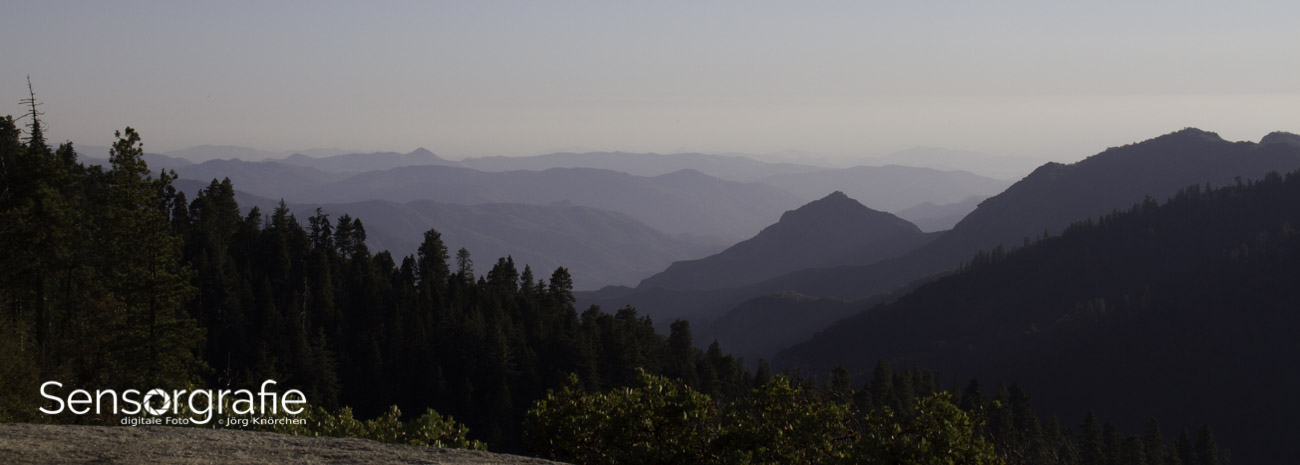
Atmospheric perspective is your strongest compositional tool. Subjects closer to the camera appear darker and more defined, while anything beyond fades into pale greys, creating natural layering that draws the eye into the frame. Use this by placing a strong foreground anchor, perhaps a windswept tree, a fence line, or a rocky outcrop, and letting the misty background carry the mood. Look for shapes that read clearly against the lighter haze; a lone eucalyptus, a jagged cliff edge, or a curved road that disappears into white.
Negative space takes on new meaning when fog simplifies a busy landscape. Rather than fighting the blankness, embrace it: a single subject occupying one third of the frame with the rest dissolved in mist often delivers more emotional punch than a busy, fully detailed scene. Leading lines work beautifully too; a fence receding into fog, a boardwalk through wetlands, or a winding river creates strong visual flow. Watch your edges; stray branches and bright patches at the borders compete with your main subject and can usually be cropped out or recomposed to avoid. A lone figure walking a track through the mist, perhaps in the You Yangs or on kunanyi/Mount Wellington, can also provide scale and a human point of connection that turns a pleasant image into a memorable one.
Working with Light to Shape Mood
Fog acts as a giant diffuser, softening every light source and turning harsh sun into a glowing orb. Backlit mist produces the most dramatic results: position yourself so the sun sits behind trees, ridges, or buildings and watch the light rays cut through the vapour, a phenomenon often called a Jacob's ladder effect during early morning shoots around Mount Hotham or the western Tiers of Tasmania. Side lighting grazes across the scene, emphasising texture in tree bark and grass, while front lighting flattens the atmosphere and generally works against the moody feel most photographers seek.
The golden hour before sunrise, and the blue hour just before it, offer the richest tonal possibilities. In Australia during winter, sunrise arrives late enough that photographers can drive an hour or more to a location in comfortable darkness. The interplay between cold blue ambient light and the warmer tones of artificial light from distant homesteads, street lamps, or city skylines creates layered colour palettes that pure daylight never provides. A small headlamp with a red filter helps preserve night vision while you walk to your chosen vantage point.
Tonal Approach and White Balance
The colour of fog varies enormously depending on ambient light. Pre-dawn mist reads as deep blue or slate, early sun paints it peach and gold, while daytime fog often looks neutral or slightly cool. Auto white balance will tend to neutralise these subtle hues, so dialing in a specific Kelvin value or selecting a cloudy or shade preset pushes the scene warmer and more evocative. Filming in RAW lets you adjust these decisions much more decisively later.
A deeper grasp of how colour temperature shapes mood makes every fog image more intentional. Photographers who want to refine this understanding benefit from revisiting the fundamentals of how colour interacts with exposure and atmosphere, and understanding white balance is a useful starting point. Cooler tones tend to feel melancholy and contemplative, while warmer tones evoke nostalgia and quiet comfort. Many photographers deliberately underexpose slightly when chasing mood, lifting the shadows in post-processing rather than at capture, preserving the depth and weight of the darker passages.
Refining the Mood in Post-Processing
Editing is where most moody fog images truly come alive. The goal is subtle enhancement rather than heavy manipulation. Begin by recovering highlights in the brightest mist, then deepen the shadows to emphasise contrast between foreground and receding atmosphere. A slight curves adjustment that lifts the lower midtones while pulling down the upper midtones gives a filmic quality that feels timeless rather than digital.
Local adjustments matter more than global sliders in fog photography. A radial filter darkening the corners creates subtle vignetting that focuses attention inward. Dodging key areas of mist near your subject brightens the natural light, while burning darker passages intensifies the sense of depth. Colour grading comes last: a slight teal in the shadows and a touch of warmth in the highlights replicates the natural colour relationships of misty mornings. Many of the same sensibilities used to render soft, deliberate moods in still life work also apply to landscapes; the gentle control of highlight rolloff and tonal separation explored in how to photograph food translates well to atmospheric scenes where subtlety matters more than drama.
| Fog Type |
Best Light |
Suggested Aperture |
Typical Mood |
| Dense radiation fog |
Blue hour, soft dawn |
f/8 to f/11 |
Mysterious, isolated |
| Drifting advection fog |
Side-lit morning |
f/5.6 to f/8 |
Dynamic, cinematic |
| Layered valley fog |
Golden hour |
f/8 to f/13 |
Calm, expansive |
| Coastal sea fog |
Backlit over water |
f/4 to f/5.6 |
Ethereal, minimal |
| Frosty alpine mist |
Pre-sunrise blue |
f/11 to f/16 |
Cold, graphic |
Fog photography rewards commitment over impulse. The scenes that linger in memory usually come from photographers who returned to the same location across multiple seasons, building an intimate sense of how weather, light, and terrain combine. Carry a microfibre cloth for moisture on your lens, keep batteries warm in an inner pocket, and resist the temptation to pack up the moment the sun breaks through. Some of the most powerful mist images arrive in those final minutes when the last wisps evaporate into clear air, leaving behind trees and ridges that seem newly revealed, as if seen for the very first time.