Mirrorless And DSLR Camera Bodies For Video Work
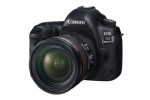
Choosing a camera body for video involves more than comparing sensor resolution or counting autofocus points. Mirrorless cameras now dominate new product launches, yet DSLR bodies remain capable production tools with familiar handling, excellent battery life and access to a large second-hand lens market. The right choice depends on the kind of footage you make, the lenses you already own and the conditions in which you work.
For Australian photographers, those conditions can vary sharply. A wedding filmmaker may move between a bright outdoor ceremony and a dim reception in Melbourne, while a documentary shooter around Darwin has to manage heat, dust and long stretches away from mains power. This review compares the practical strengths of mirrorless and DSLR camera bodies for video work, including autofocus, stabilisation, recording formats, audio, heat management and running costs.
| Video requirement |
Mirrorless bodies |
DSLR bodies |
| Autofocus during recording |
Usually the strongest option, especially for faces and eyes |
Reliable in some models, but often less confident in live view |
| Electronic viewfinder |
Useful for exposure and focus before recording, depending on model |
Optical viewfinder is excellent for stills but unavailable during video |
| Battery endurance |
Often shorter because the sensor and display remain active |
Commonly better, especially with optical viewing between takes |
| Lens availability |
Broad modern ranges, including compact video lenses |
Extensive native and adapted lens choices on the used market |
| Heat management |
Can be a concern in compact bodies and hot locations |
Generally stable, though live-view recording also creates heat |
| Video features |
More likely to offer 4K, high frame rates and advanced codecs |
Strong value in older models, but features vary considerably |
| Best value |
Newer hybrid shooting and run-and-gun work |
Affordable entry into dependable manual-focus production |
Autofocus And Subject Tracking
Mirrorless cameras have a clear advantage when continuous autofocus is central to the job. Because the imaging sensor is used during recording, the camera can analyse the scene directly and track faces, eyes, animals and vehicles. Recent models from Sony, Canon, Nikon, Panasonic and Fujifilm can maintain focus while a subject walks towards the camera, although performance still varies with lighting, lens motors and subject contrast.
This is particularly useful for solo operators filming interviews, events or social content. A shooter working along Sydney’s Bondi promenade may have no assistant to pull focus while the subject moves through changing backgrounds. Face detection can keep the shot usable, but it should be treated as assistance rather than an excuse to ignore shutter speed, aperture and the focus area selected.
DSLR autofocus during video is more uneven. Traditional phase-detection systems work brilliantly through the optical viewfinder for still photographs, but recording requires the mirror to be raised and the camera to operate in live view. Some later Canon DSLR bodies offer smooth Dual Pixel autofocus, while many older models hunt, pulse or lose the subject. For controlled interviews, manual focus remains perfectly workable, but fast-moving coverage is harder.
Image Quality And Recording Options
Both camera types can produce excellent footage when paired with a good lens and sensible exposure. A modern full-frame body gives attractive low-light performance and shallow depth of field, while APS-C and Micro Four Thirds cameras can provide a useful balance of reach, size and cost. Resolution alone is not the deciding factor: colour science, rolling shutter, highlight handling and the quality of the internal codec affect the finished image just as much.
Mirrorless models are more likely to include 4K recording, 10-bit colour, log profiles and high frame rates. These features give editors greater flexibility when matching cameras or grading footage. Some cameras record 4K with a crop, while others oversample a larger sensor area for cleaner detail. Before buying, check the actual recording modes rather than relying on a prominent “4K” label.
DSLRs can still deliver attractive 1080p and, in selected models, highly usable 4K. Their lower prices make them appealing for a student kit, a second angle or a fixed camera at a community event. However, older bodies may use dated codecs, introduce line-skipping in video or impose short recording limits. An inexpensive DSLR can be a sensible purchase when the project is well controlled, but it is less future-ready than a recent mirrorless camera.
Viewfinders, Displays And Stabilisation
A mirrorless electronic viewfinder shows an approximation of the final exposure, white balance and picture profile before recording. That is valuable in bright Australian sunlight, where judging a rear screen can be difficult. Zebras, focus peaking, waveform displays and histogram overlays further reduce guesswork. These tools are especially helpful for filmmakers working quickly without a dedicated monitor.
The DSLR optical viewfinder remains excellent for composing still photographs, with no electronic delay and very low power consumption. It cannot be used while the mirror is raised for video, so video operation shifts to the rear screen or an external monitor. Articulating screens on some newer DSLRs improve usability, but the overall monitoring experience tends to feel less integrated than on a purpose-built mirrorless hybrid.
In-body image stabilisation can make handheld footage smoother, especially with older prime lenses or adapted glass. It does not replace a tripod, gimbal or careful movement: walking footage can still show distracting warping, and stabilised sensors may create a floating appearance. Optical stabilisation in the lens can complement sensor stabilisation, giving a useful setup for travel, news gathering and location work.
For photographers moving into motion, practical technique matters as much as equipment. The night photography guide offers relevant exposure principles for low-light scenes, although video requires additional attention to shutter angle, flicker and continuous illumination.
Handling, Heat And Battery Life
Mirrorless bodies are generally smaller because they do not need a reflex mirror or optical prism. That can be an advantage when carrying a camera through the Blue Mountains, fitting a rig into a cramped car or working discreetly at a city event. The disadvantage is that a small body may have limited grip space, fewer physical controls and less room to disperse heat during extended recording.
Heat is a serious consideration in Australia. A compact camera left recording in a parked vehicle near Perth or exposed to summer conditions in Adelaide can reach its thermal limit quickly. Look for bodies with a stated continuous recording time, an effective heat-dissipation design and, where possible, a cooling fan or accessory option. Keep the screen open when the manufacturer recommends it, avoid unnecessary high-brightness settings and carry spare batteries rather than relying on a single long take.
DSLRs often offer longer battery life because the optical viewfinder consumes little power between video clips. Once recording begins, however, live view activates the sensor and display, reducing the advantage. A large DSLR grip can also feel comfortable with a microphone, cage and external recorder attached. For long-form interviews, power delivery through USB or a dummy battery may be more important than the original battery rating.
Dust and moisture resistance deserve attention too. A weather-sealed body is useful on a windy beach near Fremantle or during an unpredictable bush shoot, but sealing only works as part of a compatible system. A sealed body paired with an unsealed lens is not a guarantee against rain, salt spray or fine dust.
Audio, Ports And Production Workflow
Video quality is quickly undermined by poor sound. Before choosing between DSLR and mirrorless, inspect the microphone input, headphone output, monitoring controls and the position of those ports once a cage or HDMI cable is attached. Some entry-level cameras accept an external microphone but provide no headphone monitoring, making it difficult to detect cable faults, handling noise or an overloaded input.
Mirrorless systems usually offer more recent connectivity and better integration with external recorders, wireless microphones and USB power. Many also provide clean HDMI output for a monitor or recorder. These features matter to wedding videographers in Brisbane, small production teams in Sydney and independent journalists who need a dependable setup with minimal crew.
DSLR bodies can work well in a traditional production arrangement. A camera-mounted microphone, separate recorder and manual focus lens may be enough for a sit-down interview. Older cameras can also be easier to buy in matched pairs, leaving more of the budget for lights, a shotgun microphone, spare cards and a solid tripod. Those accessories often improve a production more than upgrading from one adequate body to another.
File management is part of the decision. High-bitrate 4K and 10-bit files require fast cards, generous storage and a computer capable of editing them smoothly. For guidance on creating a coherent imaging project, this photography workflow guide provides a useful adjacent reference. Video shooters should also plan backups before travelling, particularly when working in remote Queensland or the Northern Territory.
Lenses, Costs And Long-Term Value
Mirrorless mounts give buyers access to newer lens designs, fast autofocus motors and compact optics made specifically for video or hybrid use. Short flange distances also make many mirrorless bodies adaptable to DSLR lenses, vintage manual-focus lenses and cinema optics. The drawback is that some native lenses are expensive, and a compact body can become front-heavy when fitted with professional zooms.
DSLR systems remain attractive because Canon EF, Nikon F, Pentax K and Sony A-mount lenses are widely available through Australian dealers and second-hand marketplaces. Used lenses can deliver strong optical quality for a modest price, especially when manual focus is acceptable. Adapters expand the choice further, although electronic communication, autofocus speed and stabilisation may be inconsistent.
A sensible budget should include batteries, media, a microphone, ND filters, a cage or handle and support equipment. A mirrorless body with advanced video specifications may appear affordable until the complete kit is priced. Conversely, an older DSLR may cost very little but require an external recorder, monitor or audio solution to overcome its limitations. Rental houses in Sydney and Melbourne can be useful when a project needs a specialist body for only a few days.
The wider photography resource site covers cameras, editing software and digital imaging, which helps place a body purchase within a complete working system. A camera should serve the jobs you expect to accept over several years, rather than simply winning a specification comparison today.
Which Camera Body Fits Your Work?
Mirrorless is the stronger choice for run-and-gun video, solo shooting, moving subjects and projects that require 4K, log recording or modern autofocus. It also provides better real-time exposure tools and a more natural transition between stills and video. For creators producing travel films, interviews, property walkthroughs or event coverage, those advantages usually justify the higher initial cost.
A DSLR remains a capable option for manual-focus filmmaking, controlled interviews, landscape sequences and budget-conscious production. It is also sensible for photographers who already own several compatible lenses and want to add video without rebuilding an entire kit. A later-generation DSLR with clean HDMI, microphone input and dependable live-view autofocus can still produce professional results when the operator understands its limits.
For Australian conditions, prioritise heat management, weather resistance, battery strategy and local support alongside image quality. A body that records reliably in a warm outdoor location is more valuable than one with a longer feature list that overheats halfway through a take. Check warranty terms, repair access and the availability of batteries and lenses from Australian retailers before committing.
The best decision is therefore practical rather than ideological. Mirrorless offers the more capable modern video platform, particularly for autofocus and advanced recording. DSLR bodies offer strong value, excellent endurance and a mature lens ecosystem. Either can produce compelling work when the camera, lens, sound, light and operator are matched to the assignment.