Best wide-angle lenses for landscape and real estate photography
A wide-angle lens can make a compact living area feel open and help a coastal scene feel expansive. Used deliberately, it changes perspective, stretches objects near the frame edges and exaggerates depth. That makes focal length, camera position and correction settings as important as the lens itself.
Choosing among the best wide-angle lenses for landscape and real estate photography is easier when each model is judged by its assignment rather than by a flattering sample image. This review weighs field of view, distortion control, aperture, weight, close focus and handling, with particular attention to Australian heat, dust, coastal spray and the needs of local property photographers.
Perspective before specifications
Architecture rewards careful positioning more than extreme focal length. Moving the camera away from a doorway can reduce the exaggerated size of nearby furniture, while moving closer to the rear wall often makes a room more spacious without introducing the severe edge stretching associated with very short primes. Vertical lines still converge unless the camera is kept level or a shift lens is used.
The temptation to go as wide as possible can produce striking interiors, but an overly broad view can also diminish the sense of room size. Doors and windows bow outward in the frame, furniture appears distorted at the boundaries and people near an edge can look stretched. A 14mm prime on full frame is already broad; 8mm lenses demand even more deliberate composition.
Rectilinear lens corrections can control curvature, but they cannot physically remove perspective convergence caused by pointing the camera upwards. RAW capture, accurate lenses and perspective correction during editing remain essential. Fast apertures also require care because their shallow depth of field can leave one edge of a room sharp while another falls away.
Choosing the right focal length
For most property interiors, a 14–16mm full-frame view balances coverage with manageable distortion. A 10–12mm lens provides more space in narrow rooms and open-plan properties, although it makes careful camera placement and edge correction more demanding. Photographers who need a single tool for interiors, townhouses and building exteriors will often favour a 14–24mm zoom.
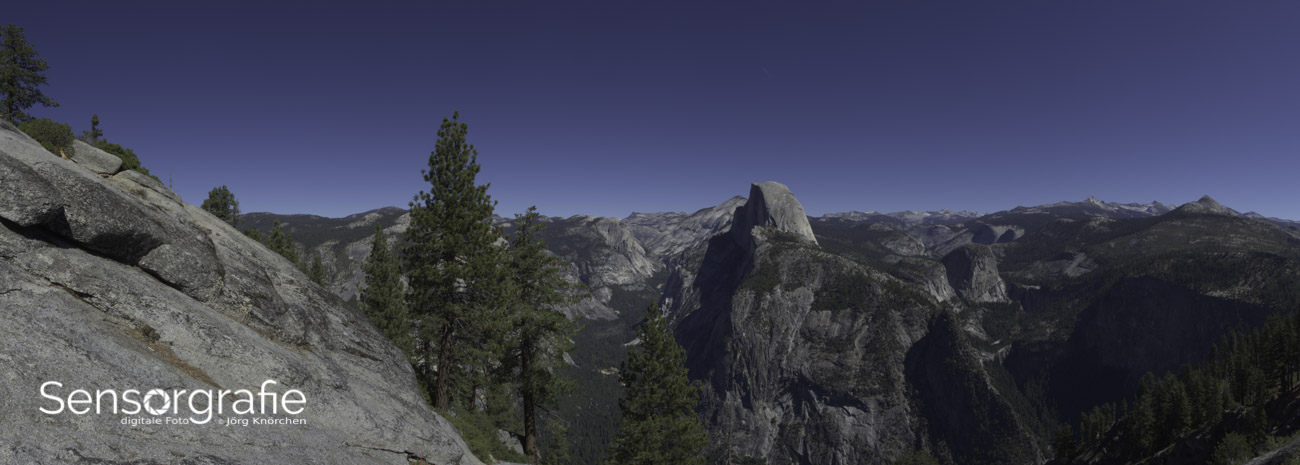
Landscape photographers have different priorities. A 14mm prime is a traditional choice for coastlines and broad vistas, while a wider 8mm model can create a more immersive composition under open skies. A zoom adds flexibility when foreground detail is uncertain, and a fast f/1.8 prime gives useful light-gathering ability for dawn, dusk and night scenes.
Sensor size changes the comparison. A 14mm lens on full frame provides roughly 104 degrees of horizontal coverage, while a 10mm lens on APS-C is similar and offers about 97 degrees. Micro Four Thirds reaches a broad angle at 8mm, but its doubled focal-length equivalent changes both perspective and depth-of-field expectations. Comparing actual focal lengths across formats avoids confusion.
Full-frame lens standouts
The Nikon Z 14–24mm f/2.8 S offers the most adaptable focal range among the conventional full-frame options. Its 14mm setting handles most rooms and landscapes, while 20–24mm provides a more natural perspective for exteriors and constrained interiors. It is a substantial lens, but the constant f/2.8 aperture and dependable optical performance suit working photographers.
Canon’s RF 14mm F2.8 L IS USM is a lighter alternative for anyone wanting a single prime. It is compact enough for property kits, remains suitably sharp for high-resolution bodies and includes optical stabilisation. A fixed 14mm design encourages deliberate shooting, although photographers covering both indoor and outdoor assignments may miss the wider end of a zoom.
Sony’s FE 14mm F1.8 GM, Sigma’s 14mm F1.8 DG HSM Art and Panasonic’s Lumix S 14mm F1.8 DG serve different priorities. The Sony leads in low light and fine detail, the Sigma balances performance and price, and the Panasonic offers an accessible route to a fast prime. Independent tests and sample galleries on Sensorgraphy’s Sensorgraphy photography articles provide useful context beyond manufacturer specifications.
Smaller sensors and specialist options
APS-C systems provide useful wide-angle coverage without the size and weight of full-frame glass. The Fujifilm XF 10–24mm F4 R OIS WR is a balanced travel and property zoom, while Nikon’s Z DX 8–14mm f/4 S reaches further into dramatic territory. Smaller sensors also make stabilisation, corner sharpness and effective depth of field important checks before purchase.
These options can be compared directly below, with their intended formats and strongest applications kept separate:
| Lens |
Format and mount |
Focal length |
Maximum aperture |
Strongest application |
| Canon RF 14mm F2.8 L IS USM |
Full frame, RF |
14mm |
f/2.8 |
Lightweight all-round prime |
| Nikon Z 14–24mm f/2.8 S |
Full frame, Z |
14–24mm |
f/2.8 |
Flexible zoom for varied assignments |
| Sony FE 14mm F1.8 GM |
Full frame, E |
14mm |
f/1.8 |
Ultra-sharp low-light photography |
| Sigma 14mm F1.8 DG HSM Art |
Full frame, E |
14mm |
f/1.8 |
High-value prime for creative work |
| Panasonic Lumix S 14mm F1.8 DG |
Full frame, L |
14mm |
f/1.8 |
Affordable fast prime for Lumix users |
| Fujifilm XF 10–24mm F4 R OIS WR |
APS-C, X |
10–24mm |
f/4 |
Travel, interiors and landscapes |
| Nikon Z DX 8–14mm f/4 S |
APS-C, Z |
8–14mm |
f/4 |
Extra-wide property and landscape views |
| Olympus 8mm F1.8 Pro |
Micro Four Thirds, MFT |
8mm |
f/1.8 |
Specialist wide-angle prime, mainly used |
Micro Four Thirds remains relevant for photographers who prioritise compact kits and creative landscapes. Its 8mm and 7–14mm lenses provide exceptional coverage, although availability is limited and the very broad angle requires strong visualisation. Used examples of the Olympus 8mm can still be attractive when close focus and fast apertures matter more than modern autofocus systems.
For straight architectural verticals, a dedicated tilt-shift lens can outperform a conventional wide-angle prime. Such optics are expensive and less widely stocked, but they solve convergence at the capture stage and reduce reliance on heavy cropping. They are worth considering for high-value architectural or commercial work rather than general listings.
Real estate across Australian cities
Sydney’s apartments, narrow terraces and deep balconies create a demanding test of perspective. Photographers often need to work around fixed floor plans, reflective glazing and limited access to natural light. The camera should remain level where possible, furnishings should stay in place unless the agent approves otherwise, and exterior shots are usually strongest before neighbouring buildings and traffic obscure the façade.
Melbourne’s compact terraces and laneway hospitality venues reward a broad but controlled view. Brisbane’s detached homes often include broad verandahs, pools and suburban settings that benefit from a slightly longer perspective, while Perth’s strong sunlight and coastal architecture require careful control of reflections and harsh highlights. A lens hood and a clean polariser or graduated filter can prevent flare, although ultra-wide filter systems may restrict corner brightness.
Property work also demands a dependable sequence under changing light. Shoot RAW, keep ISO low where possible and check every edge of the frame for stretched details. Small flash units can lift a dark kitchen or add controlled fill to an evening exterior; this Flashpoint and Godox comparison helps assess trigger systems, batteries and modelling-light options before adding equipment to the kit.
Landscape conditions and field use
Australian conditions can be harder on photographic equipment than the climate shown in most product photographs. Coastal salt residue needs cleaning before it forms a crust around rear elements, while dust from dry inland roads can lodge in the barrel and rear glass. Weather sealing offers useful protection but does not make a lens waterproof. A protective filter, a lens cloth and a properly fitted hood should be considered essential.
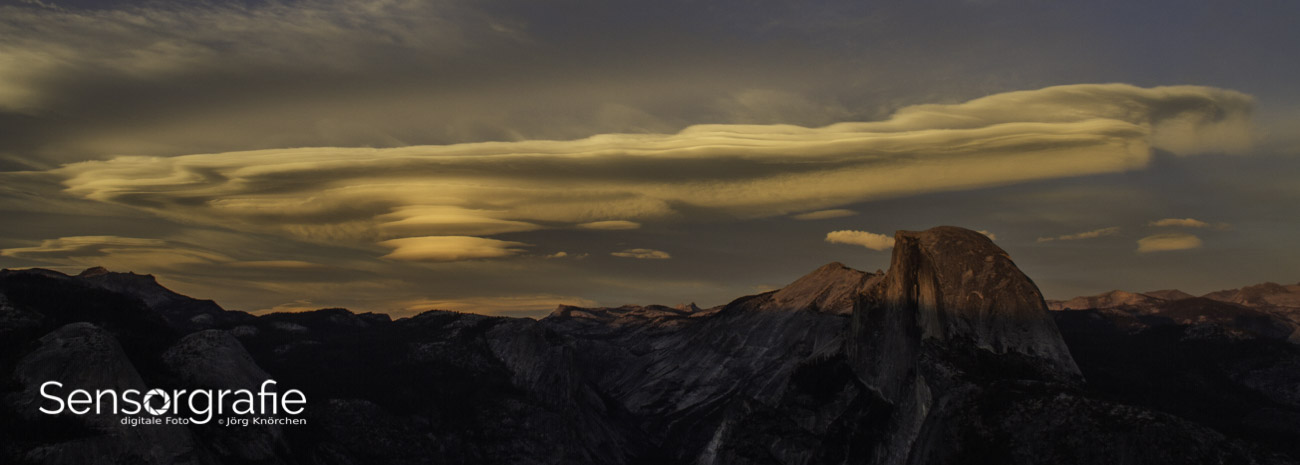
Fast wide-angle primes excel under soft dawn light and in the Australian night sky. Their f/1.8 apertures admit more light and help keep exposures short enough for sharp stars, but corner astigmatism and coma can soften the outer field. Focusing near infinity needs care, particularly with older manual-focus models. A small, bright focus aid or magnified live view makes the process more precise.
Filters remain valuable in strong daylight. A circular polariser can deepen blue skies, reduce glare from foliage and improve the appearance of water, while a graduated filter helps balance bright skies against darker foregrounds. Multiple filters on an ultra-wide lens can create vignetting or flare, so each combination should be checked before a remote shoot or a long drive through remote terrain.
Buying, owning and comparing value
Australian buyers should compare complete delivered pricing rather than headline discounts. Retail prices commonly change in Australian dollars and include GST, while stock levels and warranty arrangements can differ between authorised dealers, parallel importers and overseas sellers. A local warranty is valuable if a body or lens develops a fault, but discounted grey-market stock may transfer the initial risk to the buyer.
The most useful evaluation combines close-range images with distant scenes and strongly lit corners. Review the corners at full resolution, inspect barrel alignment and check for difficult focus transitions. Lens weight matters on long walks, yet excessive emphasis on a small weight difference can obscure whether the lens remains comfortable, balanced and easy to deploy around a property.
For most full-frame property photographers, the Nikon Z 14–24mm f/2.8 S provides the most practical range, while the Canon RF 14mm F2.8 L IS USM is the stronger single-prime choice. The Sony FE 14mm F1.8 GM and Sigma 14mm F1.8 DG HSM Art lead for low light and expressive landscapes, and the Fujifilm XF 10–24mm F4 R OIS WR is a balanced APS-C travel option. When the space demands it, the Nikon Z DX 8–14mm f/4 S or a used Olympus 8mm delivers the extra breadth, provided the photographer is prepared to control its visual extremes.