Mirrorless Cameras With IBIS For Handheld Photography
Image stabilisation has become one of the most useful advances in digital photography. Modern mirrorless cameras can compensate for small movements while you shoot at shutter speeds that once required a tripod, opening up practical options for travel, street photography, interiors and evening landscapes.
The latest mirrorless cameras with IBIS for handheld shooting vary widely in sensor size, stabilisation performance, autofocus, ergonomics and price. A camera rated for eight stops of correction may perform brilliantly with a static subject, yet offer much less benefit when the subject is moving or when a long lens magnifies every shake.
For Australian photographers, the choice also involves local conditions. Bright coastal light, humid Queensland summers, dusty outback roads, crowded city streets and the price difference between authorised local stock and grey imports all influence which body makes the most sense.
What IBIS Actually Delivers
In-body image stabilisation, usually shortened to IBIS, shifts the camera sensor to counteract angular movement from the photographer’s hands. Some cameras combine this with optical stabilisation in a lens, creating a coordinated system that can be especially effective with telephoto lenses. The result is a sharper image at a slower shutter speed when the subject itself is stationary.
Manufacturers quote stabilisation in stops, but those figures are laboratory estimates rather than guarantees. An eight-stop rating does not mean every photographer can reliably shoot eight stops below the normal handholding rule. Grip, focal length, posture, breathing, the camera’s mass and the required output size all matter. A heavily cropped image reveals softness that may be invisible in a small online file.
IBIS is most helpful for static scenes: architecture, night streets, interiors and landscapes after sunset. It cannot freeze a cyclist, bird, child or performer. A slow shutter speed can keep the background sharp while leaving the subject blurred. For moving people, a fast shutter speed and capable autofocus remain more important than the headline stabilisation figure.
A useful reference for long-exposure work is this ND filter guide, since neutral-density filters and sensor stabilisation solve different problems. IBIS allows a slower shutter without camera shake, while an ND filter deliberately reduces light so that a slower shutter can create motion blur in water, clouds or traffic.
Full-Frame Bodies For Demanding Handheld Work
The Nikon Z6III is one of the strongest all-round full-frame options for photographers who want a modern hybrid body without moving into the cost and size of a flagship. Its partially stacked sensor supports quick readout, responsive autofocus and strong video performance, while Nikon’s stabilisation is well suited to handheld evening scenes. The body feels secure with larger lenses and offers a sensible balance for travel, documentary work and landscapes.
Canon’s EOS R6 Mark II remains a convincing choice for handheld photography, especially for action, weddings and family work. Its in-body stabilisation works alongside Canon’s excellent subject detection, and the 24-megapixel sensor gives clean files without creating excessive storage demands. The EOS R5 Mark II moves into a higher class, offering a high-resolution sensor, fast readout and a robust feature set for photographers who need both detailed stills and advanced video.
Sony’s A7 IV continues to be a dependable general-purpose body, although its IBIS specification is less eye-catching than some newer rivals. The newer A7C R is more compact and provides substantial resolution, making it attractive for travel and city photography. Its small grip and dense 61-megapixel files demand good technique, though, and the compact design can feel less comfortable with large zooms.
The Sony A1 II and Nikon Z8 sit closer to professional territory. Their high-speed operation, sophisticated autofocus and excellent viewfinders make them suitable for sports, wildlife and demanding editorial assignments. These bodies offer impressive stabilisation, but the gain is most noticeable when paired with appropriate lenses and carefully controlled technique. Their prices in Australia also place them well above the enthusiast category once batteries, cards and lenses are included.
APS-C And Micro Four Thirds Alternatives
Fujifilm’s X-T5 offers a compelling combination of 40-megapixel resolution, compact lenses and effective sensor-shift stabilisation. It is a particularly enjoyable option for street photography and travel because the body is relatively light and the film simulations can produce attractive JPEGs straight out of the camera. The high pixel count rewards good technique, but it also makes motion blur and focus errors easier to see at full size.
The Fujifilm X-H2 provides a larger grip and a more practical control layout for photographers who use long lenses or record video. Its IBIS is useful for handheld landscapes and interiors, while the APS-C system keeps lens size manageable. For a photographer walking through Melbourne’s laneways or taking a lightweight kit on a Tasmanian hike, the overall system weight can matter more than a small difference in stabilisation ratings.
Micro Four Thirds remains highly competitive when portability and reach are priorities. The OM System OM-1 Mark II combines a rugged body, effective IBIS, excellent weather sealing and a large selection of compact lenses. Its smaller sensor produces more depth of field at a given framing, which benefits wildlife and macro photographers. The trade-off is reduced low-light performance compared with current full-frame models.
Panasonic’s Lumix G9 II is another capable Micro Four Thirds body, with improved autofocus, strong video features and dependable stabilisation. Panasonic’s Lumix S5II and S5IIX offer a full-frame alternative with well-regarded IBIS and attractive video specifications. They are larger than the G-series bodies but provide excellent value for photographers who want a hybrid camera for handheld documentary work.
Australia’s outdoor culture makes these differences especially relevant. A compact OM System kit may be easier to carry on a long walk around the Dandenong Ranges, while a full-frame Panasonic or Nikon can be preferable for dark rainforest interiors or astrophotography away from city lights. The best choice depends on how often weight, reach and low-light quality affect the way you actually shoot.
How They Perform In Real Handheld Shooting
For night cityscapes, a camera with reliable five-axis stabilisation can make a tripod optional. At Sydney Harbour, for example, a static building or bridge may remain sharp at 1/4 second or slower, allowing a lower ISO and cleaner shadows. The photographer still needs to brace the camera, keep the subject still and release the shutter smoothly. Electronic first-curtain shutter or a silent mode can reduce internal vibration on some models.
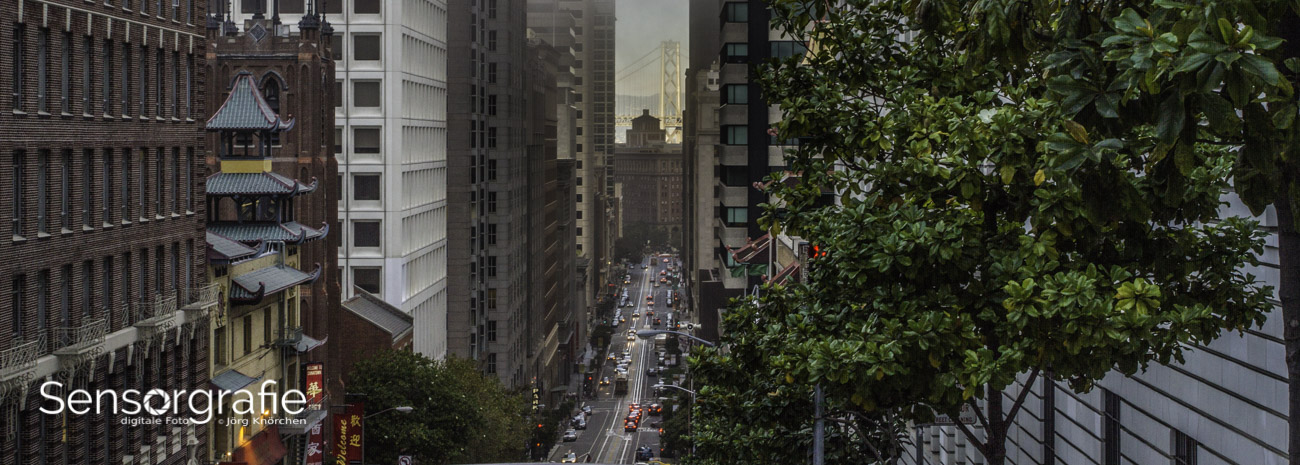
A cityscape photography guide provides useful context for balancing composition, exposure and artificial light. Stabilisation is one part of the process; it does not solve bright highlights, moving pedestrians, flickering signs or the contrast between a dark street and a brightly lit office tower.
For landscapes, IBIS is especially useful shortly after sunset, when there is still enough ambient light for a hand-held exposure. In bright Australian conditions, however, a shutter speed that is slow enough to test stabilisation may require a polariser or ND filter. Optical stabilisation and IBIS can work together, although the effectiveness varies between camera and lens combinations.
Handheld video is a separate test. Some cameras create a stable, natural-looking image with modest correction, while others introduce a cropped electronic stabilisation mode or visible warping around the edges. Panasonic and Sony offer particularly strong hybrid options, while Canon and Nikon have improved their video capabilities considerably. Before buying, check sample footage rather than relying on a still-photography stabilisation rating.
Settings That Make Stabilisation More Reliable
Good technique often produces a larger improvement than moving from one high-performing camera to another. Hold the camera with both hands, support the lens from underneath, keep elbows close to the body and gently press the shutter. A wall, railing or tree can provide an extra point of support. Turn off stabilisation when the camera is firmly mounted on a tripod if the manufacturer recommends doing so.
Suggested starting points for handheld work include:
- Use Auto ISO with a defined upper limit, such as ISO 6400 or ISO 12800, rather than accepting unlimited sensitivity.
- Choose a minimum shutter speed that matches the focal length, then lower it only after testing your own technique.
- Disable IBIS while using a solid tripod for long exposures unless the camera manual specifically permits tripod stabilisation.
- Use electronic first-curtain shutter to reduce mechanical vibration, particularly with high-resolution sensors.
- Review images at 100 percent when testing a new camera, since a phone screen can hide slight softness.
- Keep subject-detection autofocus active for people, animals and vehicles, because stabilisation cannot freeze subject movement.
- Carry a small tripod or support when a scene requires consistent sharpness across several frames.
Long lenses deserve particular care. A 200mm lens magnifies hand movement, and stabilisation may need a moment to settle after half-pressing the shutter. Some cameras offer dedicated panning modes, which are useful for cyclists, motorsport and birds in flight. For moving subjects, begin with a faster shutter and treat IBIS as assistance rather than the primary solution.
Buying Considerations For Australian Photographers
Australian pricing can change quickly with exchange rates, cashback offers and retailer promotions. Compare the authorised Australian price with grey-import deals, but factor in local warranty coverage, return procedures and repair arrangements. A lower initial price may be less attractive if a damaged stabilisation unit must be shipped overseas. Check whether the advertised kit includes a genuine battery, charger and Australian support.
Weather sealing is valuable for photographers working around Perth beaches, Brisbane humidity or sudden showers in Hobart. It does not make a camera waterproof. Salt spray, fine red dust and condensation can still reach buttons, ports and lens mounts. Use a rain cover when needed, change lenses in sheltered conditions and allow cold equipment to acclimatise before opening the camera bag.
The local second-hand market is also worth considering. Established camera shops in Sydney, Melbourne, Brisbane and Adelaide often sell inspected used bodies with a clearer history than anonymous marketplace listings. A previous-generation Sony A7, Canon R6, Nikon Z6 or Fujifilm X-T4 can deliver very effective IBIS for substantially less than a current flagship. Savings can then fund a brighter lens, spare batteries or a sturdy travel tripod.
For broader photography news, reviews and guides, the Sensorgraphy photography site offers useful background when comparing equipment and digital imaging workflows. Stabilisation should be evaluated as part of a complete system: lens selection, autofocus, battery life, ergonomics, raw-file quality and post-processing all affect the final photograph.
Choosing The Right Stabilised System
The best camera depends on the balance between portability, speed, image quality and subject matter. Full-frame bodies generally provide stronger low-light performance and shallower depth of field, while APS-C and Micro Four Thirds systems can deliver smaller lenses, greater effective reach and less fatigue during long walks. High-resolution models are rewarding but expose technique errors more clearly.
A photographer concentrating on architecture and night streets may prefer a high-resolution Fujifilm X-T5, Nikon Z8 or Sony A7C R. Someone covering sport or wildlife may benefit more from the autofocus and readout speed of a Canon EOS R6 Mark II, Nikon Z6III or OM-1 Mark II. For a mixed stills-and-video workload, the Panasonic S5II, S5IIX, G9 II and Sony A7 IV deserve close attention.
IBIS is now good enough that many photographers can leave the tripod at home for everyday assignments. It does not replace careful support, suitable shutter speeds or a lens with the right focal length, but it expands the range of conditions in which handheld photography is practical. In Australia’s varied environments, from bright coastal suburbs to remote desert roads, that flexibility can be more valuable than a small advantage in laboratory specifications.