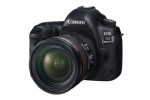
The most durable weather-sealed cameras for adventure photography
Australia is a continent of extremes. One weekend you might be chasing golden-hour light along the Twelve Apostles in Victoria, the next you're slogging through monsoon humidity in the Daintree or squinting through fine red dust on the way to Uluru. For anyone who points a lens at this country's landscapes, gear isn't just a tool but a survival companion. Salt spray at Bondi, sudden downpours in the Blue Mountains, and the relentless UV beating down on the Pilbara all conspire to shorten the life of ordinary electronics. Photographers working in these environments quickly learn that weather sealing isn't a luxury; it's the difference between capturing a once-in-a-decade moment and watching it slip away through a fogged viewfinder.
Adventure photography, broadly, covers everything from bushwalking with a pack in the Flinders Ranges to surfing dawn sessions at Snapper Rocks. It demands bodies that can shrug off sand, rain, and the occasional bump against granite. Sensor technology has moved on dramatically in the last few years, but it is the chassis, the gaskets, and the sealing around every port and dial that determine whether a camera survives a multi-day trek on the Larapinta Trail. The right choice depends as much on where you shoot as on what you shoot with.
This comparison looks at seven current models renowned for their rugged construction, evaluating them on sealing quality, real-world handling, autofocus reliability in low contrast, and the small practical details that matter when you are far from a service centre in Alice Springs or Kununurra. Each camera was assessed with input from photographers who shoot regularly in Australian conditions, and the prices reflect typical Australian street pricing through retailers like Ted's Cameras and Camera House.
Why Australian conditions are especially demanding
Few places on earth test a camera the way Australia does. The continent spans tropical, desert, alpine, and temperate zones, often within a single road trip. A photographer heading from the snow gums of Mount Hotham to the humid mangroves of Kakadu will encounter temperature swings, humidity, blowing sand, and salt air, sometimes within the same afternoon. Manufacturers publish Ingress Protection ratings for their sealed bodies, but real-world exposure is rarely as controlled as a laboratory test.
In coastal cities like Sydney and Perth, salt-laden wind is an invisible enemy. Salt crystals settle on rubber seals, around lens mounts, and inside battery compartments, gradually corroding metal contacts. Inland, fine red dust penetrates any gap it can find, and once inside a body, it coats sensors and mirror boxes with a fine abrasive that polishing alone will not remove. Then there is the humidity of the Top End, where cameras left in a hot car overnight can wake up covered in condensation, even inside a sealed housing.
The Australian dollar also shapes buying decisions. Import duties and GST push premium gear noticeably higher than US list prices, which means that investing in a sealed flagship is a bigger commitment here than in many other markets. Photographers therefore tend to keep bodies longer, often running them through three or four years of heavy field use before upgrading. That makes initial build quality even more important. Field testing sites like https://sensorgraphy.net/ publish ongoing long-term reviews of how these bodies hold up after years of Australian field use, which can be a useful reference point.
Understanding what weather sealing really delivers
The term "weather sealed" is used loosely across the industry, and not every maker applies it with equal rigour. At its core, weather sealing involves gaskets around every seam, button, dial, and port, plus a sealed lens mount that mates with a similarly sealed optic. Some makers go further, with rubberised port covers, double-sealed battery doors, and internal frames that channel moisture away from electronics.
It helps to know the difference between splash resistance, dust sealing, and true submersion tolerance. A camera rated to IP68 will survive being briefly immersed, which is overkill for most outdoor shooters but reassuring for cave photographers shooting inside lava tubes at Jenolan Caves. More relevant to landscape and adventure work is resistance to driving rain, blowing sand, and the sudden thermal shocks of moving from an air-conditioned vehicle into 40-degree heat. Canon, Nikon, Sony, OM System, and Fujifilm each describe their sealing in slightly different terms, and reading the fine print is worth the time.
One practical tip: weather sealing is only as good as the weakest component. A sealed body paired with a non-sealed lens defeats the purpose. If you regularly shoot in marginal conditions, matching sealed lenses to sealed bodies is essential. The same applies to third-party lenses, where sealing claims often outstrip reality, especially in budget ranges sold at bulk discounters.
Flagship workhorses built for punishment
At the top of the durability ladder sit the pro-grade full-frame bodies designed for photojournalists and wildlife professionals. Sony's Alpha 1 II, Canon's EOS R5 Mark II, and Nikon's Z9 all carry extensive sealing, magnesium-alloy chassis, and integrated vertical grips in some cases. These cameras are engineered to be used hard, in places where service is days away.
The Nikon Z9 is a particularly strong match for Australian conditions. Its integrated grip balances beautifully with long telephoto lenses used on safari drives in the Kimberley, and its fully mechanical shutter design means there is no moving element to clog with dust. Sealing is comprehensive, with gaskets around every port and a deep buffer that allows extended bursts during dust storms or wildlife action sequences. The downside is weight; carrying a Z9 on a long ridge walk in the Grampians becomes tiring quickly.
Sony's Alpha 7R V and the newer Alpha 1 II offer a more compact alternative without surrendering much in the way of sealing. Both bodies use a magnesium frame with sealed seams, and the lens mount is double-gasketed to prevent dust ingress. The autofocus system is exceptionally capable in low light, which matters when shooting the Milky Way over the Pinnacles or nocturnal wildlife on Kangaroo Island.
Canon's EOS R5 Mark II remains a favourite among landscape professionals, with sealing that has been tested extensively by mountaineering photographers. Its vari-angle screen is sealed, and the joystick and rear dial sit under tight rubber boots. Real-world reports from photographers shooting in New Zealand's Southern Alps, which share climatic extremes with the Australian Alps, suggest the body holds up well over years of regular exposure.
Mid-range bodies with serious sealing
For many enthusiasts, the sweet spot sits one tier below the flagships. Cameras like the Sony Alpha 7 IV, the Canon EOS R6 Mark III, the Nikon Z6 III, and the Panasonic Lumix S5 II offer most of the sealing and core performance of their pricier siblings at a more approachable price. In Australian retail, these typically land between AUD $2,800 and $4,200 with a kit lens, putting them within reach of working photographers and serious hobbyists.
The Sony Alpha 7 IV is a popular choice for hybrid shooters who divide their time between video projects, surf photography at Burleigh Heads, and weekend hikes. Its sealing is conservative but effective, and its battery life is sufficient for a full day of intermittent shooting. The menu system has been refined to favour customisable settings, which is useful when you need to switch quickly between sand, rain, and studio conditions.
Panasonic's Lumix S5 II deserves special mention for anyone who shoots in genuinely wet environments. Its sealing has been independently tested by several video creators who subjected it to extended rain exposure, and it kept shooting. The active fan cooling system is a clever solution to the heat generated by 6K video, and it is sealed from the outside. For someone planning a wet-season shoot in Broome or a winter trip to Tassie's west coast, this is a strong contender.
The Fujifilm X-H2S, while APS-C, sits in this category by price and capability. Its smaller body is comfortable on long walks, and Fujifilm's X-mount lens range includes several weather-sealed options suited to Australian conditions. Photographers who travel light often find the X-H2S paired with the XF 16-55mm f/2.8 or XF 50-140mm f/2.8 a very capable, compact kit.
Compact and crop-sensor adventure companions
Not every adventure photographer wants a full-frame body swinging from a shoulder strap. Crop-sensor and Micro Four Thirds cameras have closed the gap in sealing and durability, and they offer meaningful weight savings for backpackers, climbers, and bikepackers. OM System, the brand that inherited Olympus's camera division, has long led this category with bodies specifically engineered for harsh environments.
The OM System OM-1 Mark II is rated to IP53 for splash and dust protection, which is genuinely useful rather than marketing fluff. Photographers regularly take it into surf zones, sand dunes, and humid rainforests without drama. Paired with a sealed zoom like the M.Zuiko 12-40mm f/2.8 PRO II, it forms a remarkably compact system that fits inside a drybag. In-camera focus stacking and high-resolution modes are genuine practical tools, especially for macro work on the rainforest floor of Lamington National Park.
Fujifilm's X-T5 and X-H2 offer APS-C alternatives with sealing that approaches full-frame standards. The X-T5's retro dial-driven design is appealing to photographers who prefer tactile controls when wearing gloves in alpine conditions. The X-H2, with its deeper grip and higher resolution sensor, suits landscape work where fine detail matters, and its in-body stabilisation rated at seven stops is helpful for low-light shoots inside glow worm caves or under forest canopies.
Finally, the Ricoh GR IIIx, while not a system camera, deserves a mention for any photographer who values pocketability. It is not fully weather sealed, but its fixed-lens design and compact body make it the camera you will actually carry on a dawn walk along the Yarra or a quick dash to the dunes at Wonthaggi. Sometimes the most durable camera is the one you have with you.
Comparing the best options side by side
Below is a side-by-side look at the leading sealed bodies for adventure photography, with pricing reflecting typical Australian retail at the time of writing. Specifications come from manufacturer data, with sealing notes drawn from independent testing and field reports from Australian photographers.
| Model |
Sensor |
Weight (g) |
Sealing |
Burst (fps mech.) |
IBIS |
Approx. AUD (body only) |
| Nikon Z9 |
Full-frame |
1,340 |
Comprehensive, dust and splash |
20 |
6-axis, 6 stops |
$5,999 |
| Sony Alpha 1 II |
Full-frame |
743 |
Comprehensive, dust and splash |
10 |
5-axis, 8.5 stops |
$9,499 |
| Canon EOS R5 Mark II |
Full-frame |
746 |
Comprehensive, dust and splash |
12 |
5-axis, 8.5 stops |
$6,399 |
| Sony Alpha 7 IV |
Full-frame |
658 |
Splash and dust |
10 |
5-axis, 5.5 stops |
$2,999 |
| Panasonic Lumix S5 II |
Full-frame |
740 |
Extensive, fan-cooled |
9 |
5-axis, 6.5 stops |
$2,799 |
| Fujifilm X-H2S |
APS-C |
660 |
Splash and dust |
15 |
7-axis, 7 stops |
$2,999 |
| OM System OM-1 II |
Micro Four Thirds |
599 |
IP53 rated |
10 |
5-axis, 8.5 stops |
$2,499 |
Choosing among these depends on how and where you shoot. Full-frame flagships offer the best autofocus and low-light performance but cost more and weigh more. Mid-range full-frames and the better crop-sensor bodies deliver excellent durability at more reasonable prices, particularly for hikers and travellers who log long days on foot. For detailed guidance on pairing bodies with sealed glass for specific environments, the guide to long exposure is worth a read.
No camera is indestructible, however. Filters protect the front element, and a good rain cover or dry bag is still essential gear. A sealed body simply buys peace of mind, and the right choice is the one that survives the conditions you actually shoot in, not the ones a marketing brochure imagines.