

Smartphone Shootout: Mobile cameras are incomparable to DSLRs in terms of the quality of images they can produce. But, with the recent advancements in smartphone technologies, there are flagship devices on the market that can be a great alternative. Some of them have optical lenses on-board, while others have a whooping 41MP sensor.
For this entry, we will feature the three best gizmos, which according to experts, can give users superb imaging quality.

Image Courtesy of Nokia
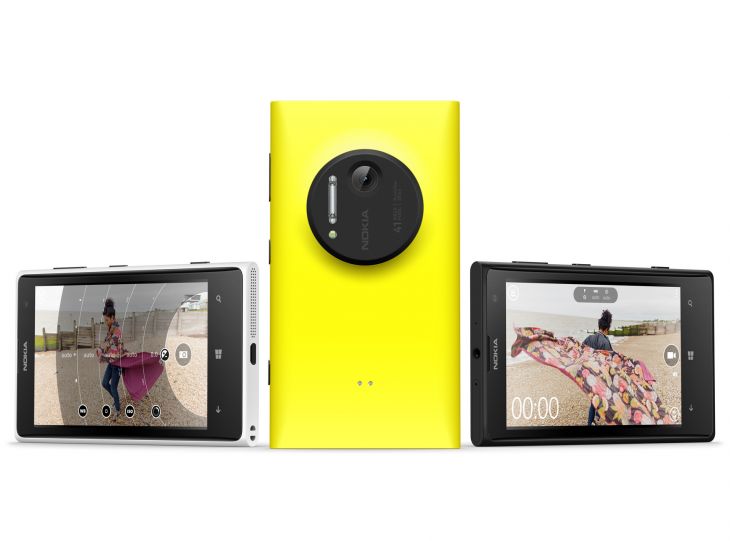
Nokia Lumia 1020
The latest addition to the Nokia’s Windows Phone series packs the highest resolution available for a mobile device – 41MP. Users of this device do not have to worry about having pixilated photos. Aside from the high resolution this gadget has, a 5MP copy is saved in the images folder for web sharing purposes. Just like its predecessors (Lumia 920, 925 and the Verizonwireless exclusive 928 handset), the 1020 also includes the company’s PureView Imaging Technology , which allows more light to enter its lens to capture crisp and sharp snapshots even in low-light scenes. There’s also an optical image stabilizer, which prevents any blurring when taking quick action shots.
Nokia Lumia 1020 runs with Windows 8.1 Amber, the latest edition of Microsoft’s mobile OS. The update brings the Nokia Smart Camera application to the device, enabling users to manually adjust the aperture, light sensitivity and exposure settings with a set of virtual controls provided in its shooting mode. However, it doesn’t have an HDR option and panorama mode by default. You still need to download apps like HDR Camera and Pro HDR to have those features.

Image Courtesy of Samsung
Samsung Galaxy S4 Zoom
Breaking the thin line between a smartphone and a compact digital camera, the Galaxy S4 Zoom aims to deliver the best of both worlds, especially with its shutter button similar to that of a point-and-shoot. Unlike the 1020, this one includes a 10x optical zoom lens embedded on the rear side of the device. Its 16MP sensor is equipped with BSI (back side-illuminated) technology that brightens the frame when there is insufficient light.
Samsung has also included the Smart Mode Suggest feature for a quick shift in shooting mode to another. A dedicated button is located at the bottom of the screen to quickly access the following features:
- Drama shot – for merging continuous shots of moving subjects to a single stitched image
- Action freeze – for instant capturing of high-speed actions
- Light Trace – for highlighting a prolonged exposure effect
- Sound & Shot – for recording a live voice over to a certain picture
A zoom ring can also be rotated to quickly shift from portrait shot, night mode, landscape mode and video recording mode.

Image Courtesy of HTC
HTC One
The One is the most intriguing smartphone camera this year since it only included a 4MP sensor, despite the hype of other devices offering 8MP to 13MP. The gadget is the first HTC device to feature the company’s UltraPixel technology . Its sensor is engineered with bigger pixels, enabling more light to enter the lens. Just like the Lumia 1020 and Galaxy S4 Zoom, it also gives an extra light sensibility when taking photographs in dark surroundings.
The HTC imaging chip inside the device promises a more realistic, high dynamic range photograph with less to no digital noise. The default camera application also has a set of on-board filters similar to the ones on Instagram.
If there’s one weakness in the device, it’s the 4MP sensor for capturing only a little bit of detail. Clearly, even if it delivers sharp images with vibrant colors, its outputs are not optimized for large-sized printouts.
These three gadgets are definitely the most innovative mobile shooters on the market that pack the latest technologies and camera optimizations. We hope our post has given you a basic overview of the main features of the three flagship handsets. What will you choose among the three options? Tell us all about it on our comments section.
About the Author
Dennis Redley is a freelance writer who is interested in technology, food and music. Outside of writing, he loves playing videogames and reading comic books. Feel free to follow Dennis on Twitter .
Pingback: Joerg Knoerchen (@Sensorgraphy)
Great post. I really like Samsung S4 zoom, it takes great photos